
Pulsed laser ablation in solution

Nanoparticle Synthesis Solutions for Biomedical Advancement

PLAS-100S: a compact benchtop platform for the laser synthesis of ligand-free, surfactant-free nanoparticles with in-line control as a design target.

Request pilot Platform specifications

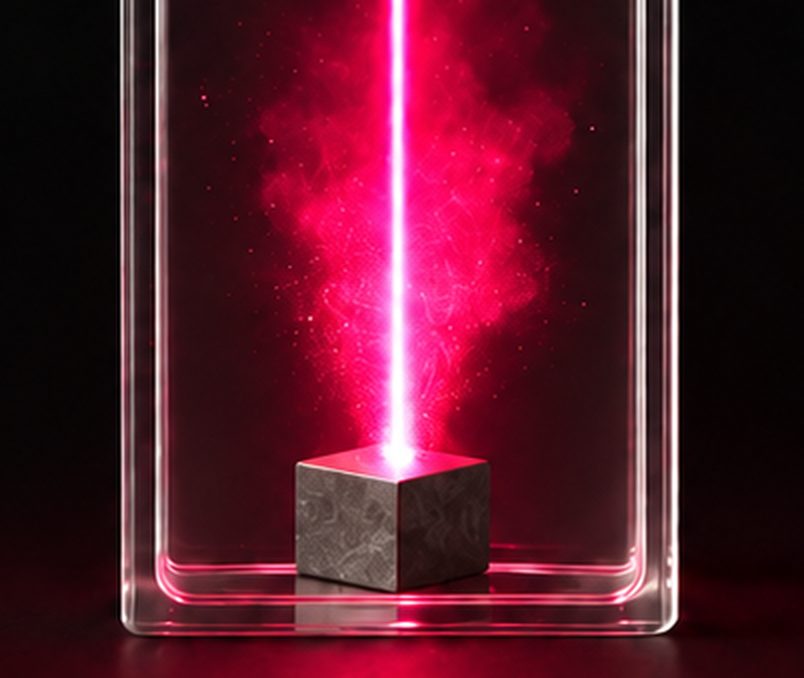
Pink laser beam ablating a metal target immersed in liquid inside a glass cuvette
Laser ablation of a metal target in liquid (illustration).
For Research Use Only (RUO). Not for use in diagnostic or therapeutic procedures.

Target design parameters for the PLAS-100S, which is under development; not independently verified. 1 Automatic stop is a design target.

PLAS Research Solutions

Illustration: laser beam ablating a metal cube immersed in liquid in a glass cuvette
Illustration.

What PLAS does

PLAS Research Solutions is developing the PLAS-100S, a compact, autonomous benchtop platform for the laser synthesis of ligand-free, surfactant-free nanoparticles for research applications, with automated in-line control as a design target. The platform is designed for National Universities, Biotechnology Research Centers, Pharmaceutical Companies, and Research Laboratories.

The PLAS-100S is intended to address current limitations by bringing nanoparticle production closer to the end user. The absence of ligands and surfactants is intended to simplify preclinical evaluation and standardize characterization workflows.
Why PLAS?

Laser synthesis does not require precursors, salts, ligands, surfactants, or toxic reducing agents. The method is designed to support reproducibility and compatibility with biomedical research. The process is designed to reduce reliance on high pressures, high temperatures, high voltages, strong magnetic fields, or deep vacuum, reducing dependence on multi-step chemical synthesis infrastructure.

Laser synthesis is a one-step method intended to reduce the need for chemical purification, drying, packaging, re-sterilization, transportation, and other post-processing steps. This is intended to speed up production and reduce the risk of chemical and biological contamination.

Biocompatibility for specific applications has not been independently evaluated. For research use only.

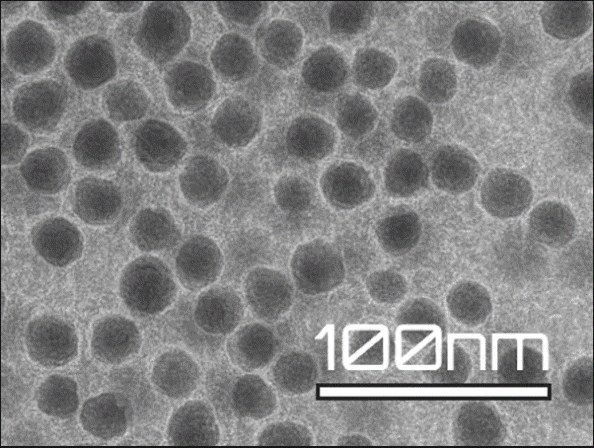
Microscope image of spherical nanoparticles with a 100 nm scale bar
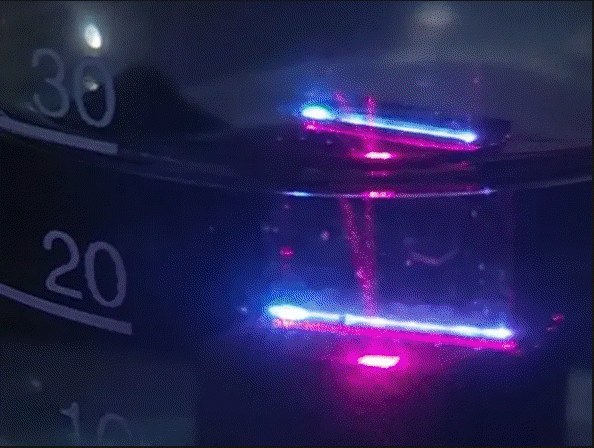
Two laser beams crossing a liquid-filled vessel during nanoparticle synthesis

How PLAS works

Pulsed Laser Ablation in Solution (PLAS) is a method of laser nanoparticle synthesis based on material evaporation and plasma formation from a target immersed in solution under laser irradiation. The evaporated material and plasma condense in the solution and agglomerate into nanoparticles, forming a colloidal suspension.

In-line UV-Vis and DLS monitoring, with automatic stop at target parameters, is a design target of the platform under development.

Learn more about the technology

We are proud members of

  • ASTM International, organizational member
  • SPIE

Downloads

  • Brochure for the Mechanisms & Barriers in Nanomedicine conference, Golden, CO, September 10–12, 2026 PDF, 202 KB. Printed material as distributed at the event; parameters are targets and have not been independently verified.Download

Contact us

Questions?

If you want to cooperate or participate in a pilot project involving nanoparticles for biological research applications, or if you would like to request research samples for evaluation, please send your request to our email. We specialize in the laser synthesis of nanoparticles.

If you want to cooperate, participate in a pilot, or request research samples, please send your request using the button below.

Message us

PLAS Research Solutions

110 16th St Ste 1460
Denver, CO 80202

Get directions

Email: info@plasrs.com